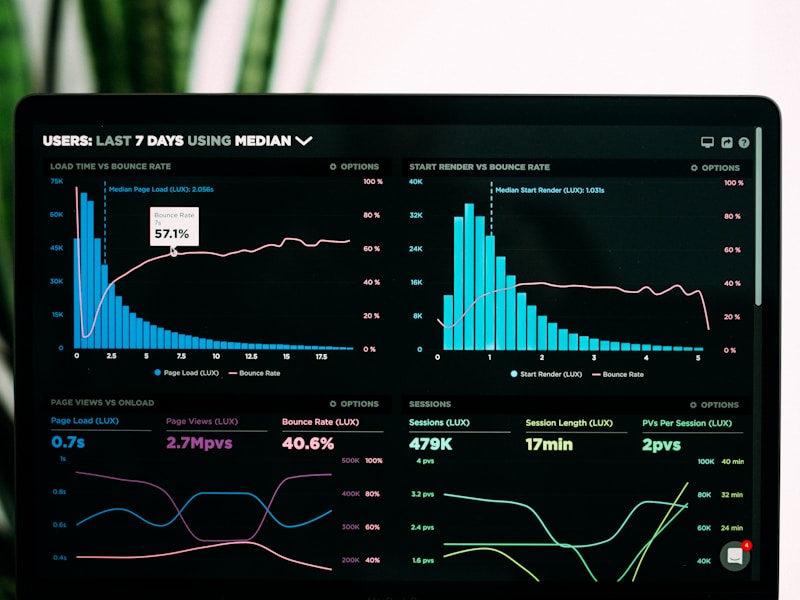
Data visualization is an art and a science. Choosing the right chart type can mean the difference between clarity and confusion. In this guide, we'll explore the most effective chart types and when to use them.
Understanding Your Data
Before selecting a chart type, you need to understand what story your data is telling. Are you comparing values? Showing trends over time? Illustrating relationships? The answers to these questions will guide your choice.
The Essential Chart Types
1. Bar Charts
Best for: Comparing values across categoriesBar charts are the workhorses of data visualization. They're perfect for comparing different groups or tracking changes across categories. Use horizontal bars when category names are long.
2. Line Charts
Best for: Showing trends over timeLine charts excel at displaying continuous data and revealing patterns. They're ideal for time series data, making it easy to spot trends, cycles, and anomalies.
3. Pie Charts
Best for: Showing parts of a wholeWhile often overused, pie charts have their place. Use them when you have 5 or fewer categories and want to show proportions clearly.
4. Scatter Plots
Best for: Showing relationships between variablesScatter plots are perfect for identifying correlations and patterns in your data. They help you understand how two variables relate to each other.
5. Heat Maps
Best for: Visualizing data density and patternsHeat maps use color to represent values, making it easy to identify patterns and outliers at a glance. They're excellent for large datasets.
Advanced Visualizations
6. Treemaps
Treemaps display hierarchical data using nested rectangles. They're great for showing proportions within categories and subcategories.7. Gantt Charts
Essential for project management, Gantt charts display tasks over time, showing dependencies and progress.8. Waterfall Charts
These charts show how an initial value is affected by positive and negative values, perfect for financial analysis.9. Funnel Charts
Ideal for showing stages in a process, funnel charts are commonly used in sales and marketing analytics.10. Network Diagrams
Network diagrams visualize relationships and connections between entities, perfect for organizational structures and system architectures.Making the Right Choice
When selecting a chart type, consider your audience, the complexity of your data, and the story you want to tell. Simplicity often wins—choose the simplest chart that effectively communicates your message.
Remember: the best visualization is one that helps your audience understand the data quickly and accurately. Don't sacrifice clarity for visual appeal.
Best Practices
- Keep it simple and focused
- Use color purposefully
- Include clear labels and legends
- Ensure accessibility with color-blind friendly palettes
- Test with your target audience
The right chart type can transform raw data into actionable insights. Experiment with different visualizations to find what works best for your specific use case.